Wednesday, 8 December 2021

The Rise of Africa's Mobile Technology & Development


Technology allows countries, individuals, societies and businesses to leapfrog and fast track themselves into the 21st century and Africa as a continent is no exception. Even though, decades ago, when the world was changing from mechanical and analogue systems to digital electronics, Africa was nowhere on the scene. But fast-forward to the present, and Africa has become a keen adopter and innovator in all things digital and mobile.

In the early 2000, the Economist, a well-respected magazine labeled the entire continent of Africa as the Hopeless continent, but their tone changed just a couple years after their depressing diagnosis. Now two decades after their initial bleak diagnosis and Africa is more peaceful, more smarter, and more technologically advanced than anyone could have imagined. Africa is an amazing come back story and we’re just getting started.

Let me ask you a question, have you been labeled and called names? Have you been rejected, ostracize, misunderstand, and given up on? If so, may Africa’s rise inspire you to never allow people’s opinions become your reality. Africa is the Future, Africa is rising and so are you. And if you agree with me, hit that like button and don’t forget to subscribe to my channel for more amazing content just like this one.

There have been many revolutions in the past but Africa as a continent has never been opportune to participate as in now. The tides are turning, and Africa is changing faster and more furiously than many imagined. Africans are waking up to their true potential and acting like equals in business, government, and culture. It is no longer about us fighting for a place at the table, no, we are building our own table, we are telling our own stories, and we are creating our own unique innovations to solve our own problems.

The question is, What happened? How did the hopeless continent become the hopeful continent, an awakening giant? Well, the Mobile phone happened. The Internet happened. And little did we realize that the revolution had begun, although it would be a decade since the mobile landed before the tsunami arrived…and now its here in full force. The Mobile phone is the one input that has disrupted much of African culture, business, and politics. The mobile phone is the one meaningful change in the algorithm of Africa that no one expected it’d have the impact is has so far.

According to McKinsey, the number of smartphone connections on the continent is forecast to double from 315 million in 2015 to 636 million in 2022—twice the projected number in North America and not far from the total in Europe. Mobile technology is allowing tech-savvy Africans to leapfrog western developers in some areas to develop innovations that solves real-life problems. Young people are hungry for change and Entrepreneurship is booming across the continent.

Mobile technology has been a game changer for Africa and the major reason for mobile phones’ ability to transform Africa so successfully is that they serve as the primary platform for Internet access. The mobile phone is more than just a communication tool for many Africans.  For many of us “the mobile phone is our landline, our bank account, our ATM, email, our torch light, and much more in one device. As mobile phones become more widespread and less expensive the digital divide will be reduced and more African citizens will have even more access to technology and home-grown innovations.

Mobile phone penetration is skyrocketing throughout the continent. Mobile phone penetration in Africa increased rapidly in the past 2 decades, going from 1% in 2000 to 13.5% in 2011 and 29.3% in 2016. And as of 1st quarter of 2020, the internet penetration rate in Africa stood at 39.3%, meaning that roughly four in 10 people on the continent used the web according to Statista Reports.

Although internet penetration is growing fast, many Africans still don’t have access to the internet or the mobile phone. Yes, all is not perfect in paradise. Africa has a huge infrastructure problem. Data from the World Economic Forum indicates that, Two-thirds of Africans still lack internet access altogether and internet data is still significantly slower and more expensive on the continent than other parts of the world. This lack of infrastructure represents a barrier to full blown development. In some African countries more people have access to a mobile phone than to clean water, a bank account or electricity. However, challenges don’t mean there’s no progress and progress don’t eliminate challenges. In fact, challenges are the birthplace of innovation. And in my opinion, our myriad of problems are our biggest advantage. Do you agree? Or do you disagree…Share your thoughts in the comment section below.

And so, here’s an important message to those who still don’t believe in Africa or those who see Africa only through the eyes of Western media:

Africa is indeed rising. Africa is changing her narrative to building creative innovative solutions and development projects. Africa is shifting from rumors of wars, reports of wars, conflict, corruption, poverty, diseases, and viruses. Nowadays, Diseases and viruses are no longer an African thing. It seems every country has a virus or some form of diseases. (no pun intended). We’re all wearing masks…aren’t we?...smile

People who keep misunderstanding Africa run the risk of missing out on one of the 21st century’s greatest economic success opportunities. Africa may be the last continent to undergo rapid economic development but last doesn’t always mean least or hopeless.

Africa is one of the fastest growing mobile regions in the world and has also become a cradle for creative innovative solutions. Africa is also the fastest growing and second largest mobile phone market in the world. And this has created an entirely new platform for citizens to build innovative solutions. Africa is one of the biggest emerging markets in the world, offering tremendous opportunities for people and businesses who are brave enough to seize them. The adoption of the mobile phone and other emerging technologies together with truckloads of problems are making the continent a fertile arena for creative innovations.

It is also important to note that Africa now boasts the fastest growing middle class in the world, and despite the impact of Covid19 pandemic, 6 of the top 10 fastest growing economies in the world are still in Africa and with the majority of Africa’s population still under the age of 35, this revolution is unstoppable!

Africa offers exciting opportunities not only for business but also for people who want to start over in life, those who want to be part of changing the African narrative and build a legacy on the continent. Yes, Africa’s population is young, ambitious, hungry for change, fast-growing, creative and innovative. Hence, technology adoption is helping African young entrepreneurs to solving infrastructure challenges across the continent. Massive urbanization and the rapid rise of the middle-class on the continent are changing Africa's economic landscape and this in itself is a topic for another day.

The key to Africa’s achieving its own digital revolution has been innovation at every step, with inventors and innovators adapting mobile technology to suit the specific needs and dynamics of the continent instead of copying innovation from other parts of the world that may or may not be relevant to the needs of Africa

Mobile technology has pioneered new innovations in Africa and Kenya’s economy is a shining example.

M-Pesa, the mobile phone–based money transfer service launched by Kenya’s mobile network operator Safaricom, is by far the most famous and successful mobile money innovation not only in Africa but around the world. 

Building on that model, young African software developers are building innovative solutions to everyday problems on the continent. Mobile innovation provides an important avenue for African economies to leapfrog not only financial development but also development across other sectors of the economy like agriculture, healthcare and education. Mobile innovations are a success in Africa because the younger demographic is more ready and eager to adopt new technologies compared to aging populations in developed countries. 

What do you think about Africa’s digital revolution?

Basic Entry-Level Digital Skills for Social Inclusion!


Image Credit: Shutterstock

There is a general misconception that digital skills are only for employees or those looking for office jobs. While there is a lot of truth in that claim, there is also a huge digital divide being created if we continue to think only job seekers or those already in employment are in need of digital skills. Everyone should be digitally literate.

These days you can control your heating, lighting, even your washing machine from your phone. We live in a digital world and technological advancements affects everyone. And so everybody needs digital skills in this age and time. Yes, nearly all jobs now require some knowledge of ICT whether blue collar or white collar jobs this will escalate as the future of work unfolds.

However, everyone needs digital skills, from teachers to students, to parents, to employees, to business owners, to farm workers even down to the janitor and cleaners. Home systems are becoming smarter, cleaning equipment and machinery are becoming autonomous and smarter. Cleaners need to learn to operate these systems. We have become digital citizens and a broad definition of digital citizenship is simply the ability to use technology and the internet.

Entry-level digital skills, meaning basic functional skills are required to make basic use of digital devices and online interactions. These are widely considered a critical component of a new set of literacy skills in the digital era.

Digital Skills Beyond the Employment Criteria.

Acquiring entry-level digital skills for social inclusion goes beyond job seekers. Every area of life now requires digital intelligence. The digital divide crises and social inclusion would be easy to navigate if the aim is for everyone to acquire basic digital skills rather than just a specific group of people.

Entrepreneurs and small business owners need digital skills so they can digitalize their businesses and make good use of eCommerce opportunities and platforms. The era of brick and mortar businesses is fast becoming obsolete. Children growing up and swiping on their parent’s phones won’t do engage much in brick and mortar. And so, every business owner should look into how they can leverage digital to run their businesses. E-commerce is the future!

Image Credit: Shutterstock

Artists need digital skills so that they use the internet to showcase their artwork to the world.

Authors, Writers, content creators like myself need Digital skills so we can reach more people with our message.

Teachers need digital skills so that can better equip, prepare and train the next generation for the digital world.

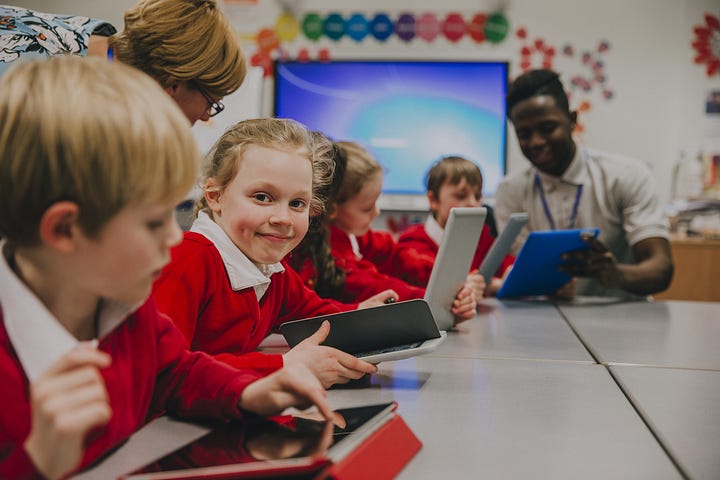
Students need digital skills so that they can make good use of online learning and other learning software.

Stay at home Mom/Dad, you need digital skills to help your child with homework. Homework is no longer on paper but on the internet.

Housewives need digital skills so that they can shop online especially during a time like the Covid-19 pandemic the world is currently facing.

Farmworkers need digital skills so that they can be able to operate new technologies like drones and other tech machinery in the agricultural sector.

Even taxi drivers need digital skills so that they can understand how to use a GPS to get direction. This may sound strange to some people like you mean some taxi drivers don’t know how to use GPS? Yes for sure! Well, we not talking about Uber taxi drivers here.

Let me tell you a quick story. I was in Rwanda for a conference, just before the world went on lockdown. Rwanda is my all time Favorite country in Africa! Well, while in the capital city, Kigali, there was a particular place in the city that I’d planned to visit. And so, I requested a taxi to this place but the driver took me to the wrong place, twice.

We drove around for almost 2 hours and he still couldn’t locate this place. I remember asking him on several occasions to use the GPS and he had no idea how to use that. The 2nd major challenge was that the GPS spoke English while the driver could only communicate well in his local language. I remember feeling so frustrated as my flight was almost due and I just couldn’t take the risk of missing my flight. I painfully ask him to take me to the airport. And that was what happened in relation to taxi drivers and GPS.

Self Service Systems

Digital skills also include the ability to use self service checkouts at retail stores and restaurants. I’ve been to some MacDonald’s outlets and food is ordered only via a self service kiosk. People lacking digital skills will start to intentionally avoid restaurants like this. Closing the digital divide gap requires that everyone should strive to acquire digital skills not only students or job seekers.

People lacking basic digital skills may start avoiding not only certain types of restaurants and supermarkets but other retail stores with self service technologies simply because they don’t want to embarrass themselves with new self service systems. Learning digital skills will boost your confidence to do things online.

These may sound like futuristic concepts to some people but self services technologies are not in the future but in the now. Its only a matter of time before self-service systems infiltrate everywhere you go. Soon you’ll go to a supermarket, pick your groceries, scan them by yourself and pay without the help of a cashier.

For those of us in South Africa, have you noticed that in almost all retails stores, cashiers don’t touch your bank cards anymore? They only scan your products, you insert your card on their payment machine yourself and that’s exactly how the retail industry is training us for self service. Even the cashiers don’t realize that they are training us for self-service.

Self service goes beyond the retail industry. It extends to logistics and the hospitality industry as well. The next time you are traveling, you may not meet real people at the check-in desk when you get to the airport. You may have to check in your luggage online or at any of the self service kiosks at the airport. When traveling on a smart train like the Gautrain In Johannesburg, South Africa, you may have to get your ticket at the self service counter instead of actually paying to a cashier. When you get to your hotel room you may have to check-in without the help of anyone at the hotel reception.

I could go on and on. This is the new normal. So make sure you learn as many digital skills as you can.

Image Credit: Shutterstock
To thrive in the connected economy and digital society, digital skills must also function together with other abilities such as strong literacy and numeracy skills, critical and innovative thinking, complex problem solving, an ability to collaborate, and social skills.

Another point is that we are digital citizens and all digital citizens must learn to protect themselves online and avoid unsafe practices. Online security is a huge topic on its own. I will probably write an article on this topic as well.

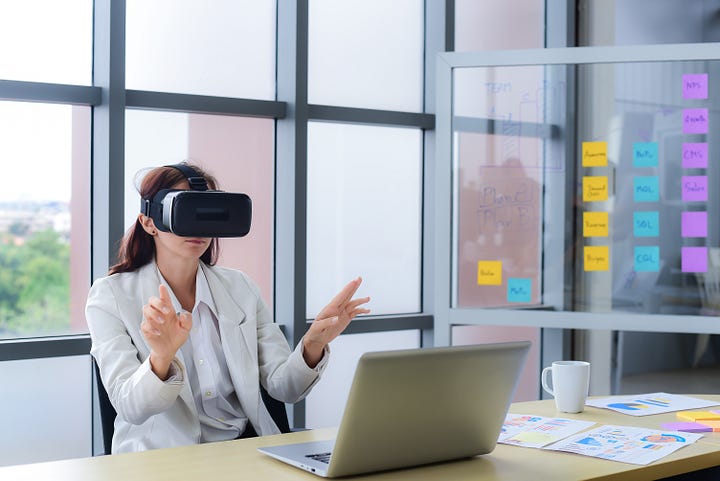
So, whatever you do and whoever you are, you need basic digital skills, else you might start avoiding certain retail outlets. Major technology breakthroughs are expected in the next ten years or so and will impact all forms of work and the structure of labour markets as well as other aspects of life. One such breakthrough we are starting to see is the Metaverse. The Metaverse is the next phase of the internet. A digital reality environment represented by digital representations of people, places, and things.

Thursday, 25 November 2021

In the Midst of Crisis, was Facebook Name Change (META) a Good Move?

 Disrupting From Within!

Image Credit: Shutterstock

Recently, in a corporate event that seemed to have the vibe of a sci-fi movie, Mark Zuckerberg, the founder and head of all things Facebook announce the change of name and introduced his vision for the metaverse.

Since then the internet has gone gaga. Everyone’s been talking about Meta, Facebook and the Metaverse has now become a mainstream conversation. Some people are excited, some are up in arms and some are downright confused.

Personally, I think Facebook name change is one of the best business moves and if people can get out of their feelings about Facebook scandal, perhaps they can learn a thing or two from Mr Zuckerberg.

Here’s a quick scenario:

If you were being chased by a lion, will you just stand there waiting for the lion to come and devour you or will you try to escape even if all odds are against you? And if your house was on fire, will you try to save yourself and see how much you can salvage from the fire or will you just surrender and die in the fire?

I suppose each and everyone of us will try to do something to remedy the situation, even if we end up making a really bad decision like pouring water into the fire or running toward the lion. Yet some people wanted Mark Zuckerberg to just sit in the fire and do nothing while some wanted him to just offer himself as free lunch to the lion.

As a business person, if something is going wrong in the business, it’s your responsibility as a leader to do something about the situation. Whether the problem is internal or external, a leader cannot just bury his/her head in the sand and hope for the best outcome. And that’s why Mark Zuckerberg changed his business name even in the midst of the crises they are facing.

Which has led Facebook critics to argue that by shifting focus to the rebranding of the company, Mr Zuckerberg is aiming to distract from recent controversies and there’s some truth to that. Yes, he’s trying to save his house from fire. He’s trying to redeem Facebook reputation.

However, my take on this is entirely from the business point of view, not an ethical perspective. Ethics is a topic for another day.

And so, the rebranding came when the world’s largest social media conglomerate battles these criticisms over maximizing profits, spreading hate speech, racism, dissipation, keeping users addicted and engaged for longer than necessary online and many other shady business practices.

Facebook in the midst of all this, decided to change its name from Facebook to Meta.

Image Credit: Shutterstock

To be fair, no amount of corporate rebranding should let Mr Zuckerberg off the hook for the harm Facebook is causing to society. A name change won’t fix anything. Facebook by any other name will still try to collect all your data. Nothing here is really changing.

And so, Facebook is now officially called Meta. But the App will still be called Facebook, Instagram will still be called Instagram, WhatApp will still be called WhatsApp and every other App that was under Facebook will still keep its name. Mark Zuckerberg will still be CEO, and nothing else will change.

Guess I needed to explain that because some people were already searching for the Meta App on Apps Store…lol

Well, Mark Zuckerberg has a vision and is changing the company name to reflect their vision for the future. Just like Google did something similar back in 2015. The search engine is still Google, but they changed their name and announced the umbrella company which is now called Alphabet though many still refer to Alphabet as Google.

What Mr Zuckerberg is trying to pull off is much bigger and more profound than just a name change. This is about opportunity and market domination. This is about being futuristic. He is trying to take control of what he thinks is going to be the next big wave of technology — the Metaverse!

And I think everyone with a business mindset should appreciate this move. It may seem the name change is only in response to the Facebook scandal but the plan to capitalize on the Metaverse has been in the works for years.

The Metaverse is totally part of Mark Zuckerberg’s vision for the future of computing. Facebook has been doing the research for years. This is not entirely about distracting from the crisis they are facing.

Even if it were a distraction, Mark Zuckerberg is already doing a good job in distracting by acquiring companies and building those under his brand. The Facebook company which is now Meta owns WhatsApp, Oculus, Messenger, Facebook itself and Instagram.

Statistics shows, only 38% of people know that Facebook owns Instagram. Only 29% of people know that Facebook owns WhatsApp and majority of people don’t even know Facebook is now into hardware as well as Facebook bought oculus in 2014, a company that produces VR headsets. That’s to show you how far back this vision to dominate in the Metaverse has been.
Image Credit: Shutterstock

Mark Zuckerberg is so smart to use a very basic name — Meta. A name that is so connected to the Metaverse. When I first heard that Facebook was planning to change its name, I thought mmhh… they’re probably going to come up with something so unique and mind-blowing and I was looking forward to it. Then on the day of the announcement, it was META…and I was like… Meta! With all the creative people you’ve got on your team and the best you could come up with is just Meta?…lol

Mark Zuckerberg is very strategic in how he names his products or services. He is very intentional about this name, Meta. He wants that whenever people think of the metaverse they’ll think of him. The Metaverse was already a thing in the gaming world but many people didn’t know about it until Mr Zuckerberg popularize the term.

Mark is a genius in how he colonizes namespace. For example, pages, groups, marketplace and messenger are just a few concepts. And whenever you hear of pages, you don’t think of yellow pages, do you? You think of Facebook pages, of course. The same goes for groups.

And now Mark Zuckerberg is doing the same with the Metaverse knowing that this is going to be an explosive new area of technology that will create a boom of new businesses and opportunities similar to the way that we saw a huge new wave of Apps arrived when the mobile internet became mainstream.
 
Currently, Facebook is spending millions of dollars on research and development, because so far, no one fully understands exactly what the Metaverse is all about. I don’t either.

The closest we have in describing the Metaverse are two popular games that were born during the pandemic. Fortnight and Roblox. I suppose they are other games too. These games are like an open world environment in the digital space where gamers can roam around and do whatever they want.

I know these games because I’ve been seeing my kids playing them. I have seen how immersive they can get into the game. They create their own Avatars. My son told me he can be anything he wants to be in those games. My daughter was playing Roblox one day and literally started screaming that her house caught fire and I was looking at her like, you mean you’ve got a house in there? And she responded, “yes Mami, I also got a job.” And that’s how immersive and real this is.

Well, there are mixed ideas on what the Metaverse will ultimately be, but some believe it will take the form of a persistent virtual universe where every brand, company, independent user and independent content creator are interconnected.

Image Credit: Shutterstock

In the Metaverse, your devices won’t be the focal point of your attention anymore. Imagine an Internet of apps and websites that you could actually walk inside of in 3D, much more similar to the virtual game Fortnight I just mentioned.

Well, some people are predicting the Metaverse might just end up being kind of like a Zoom Conference Call but with better graphics. I think it’d be way better than that. Well, nobody really knows for sure. This is still evolving.

Computers and mobile phone will have to become a lot stronger and internet data will have to become a lot faster before we can fully experience the Metaverse.

Mark Zuckerberg has come a long way. Looking back at his history of how he built Facebook to what it is now is pretty inspiring. His products may not be perfect but that doesn’t discredit him as one of the great minds of our time. Though he didn’t build or develop all his products except Facebook. The rest of his products, he buys and then scales.

However, he cannot buy the Metaverse because it doesn’t even exist yet and it’s impossible for anyone one company to buy the Metaverse anyway. One company will not represent the metaverse, just like one company doesn’t represent the internet

So, what mark Zuckerberg wants to do is to be one of the companies pioneering this new ecosystem. Though it seems he might be late for this party as they are gaming companies that seem to be ahead of him already. However, he has an advantage, currently dominating the social media market, he has the numbers, the money and talent. Facebook plans to hire 10,000 highly specialized engineers in Europe to work on their Metaverse.

Facebook bought Oculus back in 2014 as part of this vision and has been trying to buy several other companies in the Metaverse space including Unity, which is a game development engine helping companies build products for the Metaverse.

The internet took off with laptops and the mobile internet took off with smart phones and the Metaverse is taking off with gaming consoles and this will evolve into VR headsets, AR headsets, bodysuits, VR glasses and probably devices we don’t yet know about.

And that’s why Mark Zuckerberg is getting into the hardware side of things.

Image Credit: Shutterstock

However, this doesn’t mean the Metaverse is going to be any safer for us users. So, we need to be careful about what data we give away and make sure that we always keep the protection of what matters most to us, not only our data but our social relationships as well. Don’t allow yourself to be swallowed by new technologies.

Businesses will always do what businesses do to make money but you do what humans do to stay human. Businesses don’t really care about us or our mental health or our personal relationships. You are the one responsible for your mental health and personal relationships.

Instead of complaining about how the Metaverse is going to destroy human relationships and social interactions, you as an individual should be focusing on how you can become a better human being in the age of avatars and robots.

Don’t be mad at Facebook for their business decision to make the Metaverse a reality but focus on how you are going to protect your data. This is going to fundamentally change how business is conducted. Its also going to impact the future of work.

So, focus on studying how the Metaverse is going to impact your life, job or business. Focus on what the opportunities in the Metaverse might be. You cannot control technological advancement. You cannot control what tech giants do but you can control how their inventions and innovations impact you as an individual.

Monday, 25 May 2020

I Have Full Faith in Africa. Our Problems are our Biggest Opportunities. Africa Day 2020


Yes, Today is Africa Day! How amazing is that! An entire day dedicated to Africa. We are truly blessed! I am super excited about anything AFRICA!
For those who do not know what Africa day is all about, It is an annual commemoration of Africa’s independence, freedom and liberation strife from colonial imperialists. In simple terms, Africa Day celebrates and acknowledges the AU’s successes in the fight against colonialism. It is about the progress Africa is making inspite of the challenges the continent still faces in a global environment.
Speaking of challenges, oh yeah, we do have truck loads of challenges as a continent. From corruption to bad leadership, poor infrastructure, poverty, hunger, lack of access to electricity, lack of access to the internet…African youths dying in containers and the Mediterranean sea in search of greener pastures. oh boy! We have all kinds of adversities. We don't set an alarm clock while we sleep our problems will wake us up...Think of any problem and you’d most likely find it here in Africa….but that’s not our story! Or to put it into perspective, that's not our only story.
And so, you may wonder, why do I still have huge faith in Africa? Why am I so excited about this continent when we have so many problems? I’ll tell you why just in a sec. but first lets look at history…
About 20 years ago, the Economist Magazine ran a front cover referring to Africa as a Hopeless Continent. At the time many people saw Africa as a forsaken place - ravaged by war, famine, poverty and all sorts of diseases but 10 years later, in 2011 to be exact, the same Magazine ran another cover with the slogan “Africa Rising.”
The narrative has changed. Africa is now being seen as a continent of promise, prosperity and growth. Many that used to look to Africa with pity are now looking to Africa for opportunities.
Yes, indeed Africa is rising and we’re just getting started. Africa is rising and there is no shortage of creative minds willing to dig their hands deep into technology to create disruptive solutions for the continent. This is why I believe in Africa!
“The future of the world is being built in Africa.” These were the words of Mark Zuckerberg on his first ever visit to Africa in 2016. They say, necessity is the mother of innovation and Africa has the purest form of innovation. Our problems are unique and so are our solutions. They are creative people doing things to make the continent better. Tech hubs today are efficient vehicles not only to attract capital and expertise but to lead the very debate around technology and progress on the African continent.
One of the striking things about Africa and the Tech Hub landscape is the local talent, the entrepreneurial energy, the passion and the drive to make a difference. Thanks to technology, and the Fourth Industrial Revolution; startups and entrepreneurs are mushrooming all across the continent and creating what is referred to as the African startup revolution…(this alone is a topic on its own, just not for today)
And so, not all African youths are baptized with the mindset of "searching for greener pastures outside the continent." Many are going against the grain, refusing to run away. They are taking the road less travelled instead of the well-beaten path. The Fourth Industrial Revolution is a unique opportunity for Africa as a continent to be part of the conversation and participate in framing the digital future and the Africa we want.
Covid-19 as devastating as it is, is also leveling the playing fields for Africa and giving us the courage to solve our own problems. Africa is now looking within her own borders for creative solutions to fight this pandemic…and so far, we’re doing pretty great. For Example, Senegal's $1 Covid-19 test kit that gives results in 10 minutes. Ventilators are being built across the continent rather than running to China. I believe these home grown innovations will continue even after Covid-19 and our dependence on China and the west will be reduced. 
New technologies like blockchain, drones, artificial intelligence, the internet of things (IoT), etc offers a new vision for innovation, development and economic growth on the continent. These new technologies can solve a host of business and societal challenges, from providing better healthcare and basic services to creating more efficient governments and helping businesses become intelligent enterprises that can drive growth and prosperity.
However, there are opposing schools of thoughts regarding the adoption of new technologies on the continent. Some say Africa is not ready for Industry 4.0 while others like me think its our biggest opportunity. I believe the positive future requires that Africa becomes part of the revolution and uses technology to benefit the continent rather than allow technology to use the continent. It is either we disrupt or we’ll get disrupted. There’s no neutral ground! And we cannot succeed in a Vacuum. We cannot compete on the global stage with old tools and old ways of thinking. We need new technologies!
In reality, Covid19 has made this claim of Africa not being ready irrelevant. Because at this point in time, there’s no company that hasn’t in some way embraced the idea of remote work. Some of the most traditional organizations here on the continent embraced digitization in a matter of days.
As the saying goes, Necessity is the mother of innovation and as such Africa is an innovation hub. It is quite clear that Africa is ready to start being a key player in the tech revolution. Despite some political muscles still being wasted on power retention rather than on developmental plans in certain parts of the continent, Africa’s newest generation are breaking barriers to write their names on the sands of time, not only in their respective countries but also on the global timeline.”
Here are some examples of African innovators building incredible solutions that are not just innovative for the country where they are, but have global relevance.
  • CardioPad: Africa’s first handheld medical computer tablet that can diagnose people with heart disease. It was invented in Cameroon by a 24-year-old engineer, Arthur Zang. It is expected to facilitate the diagnoses and treatment of patients with heart conditions across the African continent.
  • Pelebox Smart Locker: A technology to ensure patients can collect their chronic medication in under 2 minutes instead of waiting hours in queues. Invented in South Africa by Neo Hutiri after he was diagnosed with tuberculosis and faced difficulties collecting his medication.
  • Majik Water: A water harvesting system that captures water from the air and converts it into drinking water using solar technology. Invented in Kenya by Beth Koigi after going for months without any tap water in eastern Kenya.
There are many more fascinating examples of African innovation in my book, Disrupt Yourself Or Be Disrupted.
The innovators in the examples above could’ve waited on the government to solve these problems. There could have waited on the help from Europe or the West, but they didn’t. They could’ve have organized protest, sing on the streets, and destroy public properties but they didn’t. They decided to do something about the problems in their respective communities. Problems in a way are a gift. Problems are opportunities. An easy life does not create champions. Easy jobs don’t create great employees, easy businesses don’t become unicorns, etc.
And so, in conclusion, As a young African, are you solution oriented? Are you going to be waiting on government or are you going to go out there and be part of the solution? John F Kennedy said, “Ask not what your country can do for you – ask what you can do for your country.” I challenged every African wherever you are in the world to contribute in some way to the good of this beautiful continent.
And to leaders across the Africa continent, I suppose its time to answer whether you’d choose between progress, good governance and investing in young creative minds or the old leadership style of protecting bureaucracy and outdated dogma that doesn't serve the people?
Disrupt Yourself Or Be Disrupted
Available on Amazon
No alt text provided for this image


Nicky Verd is a Digital Strategy Consultant, Keynote Speaker and a leading thinker on driving innovation and digital transformation through personal disruption. She is a voice for those who yearn to upskill, reinvent and recreate themselves.

She is also a Brand Ambassador for Southern Africa Startup Awards and a Huffington Post Contributor. 

Visit her Website for more info about her work and services


Follow her on Social Media:

"You owe yourself everything you expect from others"